Reporte preparado por el equipo de estudiantes de 82-345: Community Connections
(English text below)
(English text below)

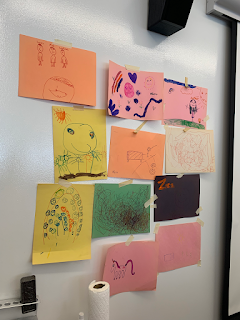
El último evento del semestre fue un éxito y se trató sobre el cuidado personal. Para empezar el evento hicimos una breve introducción. Todxs nosotrxs nos presentamos y después les pedimos a lxs niñxs que se presentaran. Durante la introducción, hablamos sobre el significado e importancia del cuidado personal. Nos pareció interesante que lxs niñxs supieran sobre el tema del cuidado personal. Esto fue algo bueno porque nos ayudó a navegar el tema de una manera más fácil, ya que lxs niñxs estaban informados. Les preguntamos qué podían hacer para practicar el cuidado personal, y ellxs indicaron que podían hacer ejercicio, dormir, y comer saludable. Al final de la introducción, comenzamos la primera actividad donde lxs niñxs dibujaron sus emociones en este momento. ¡Hicimos un mural con los dibujos también!
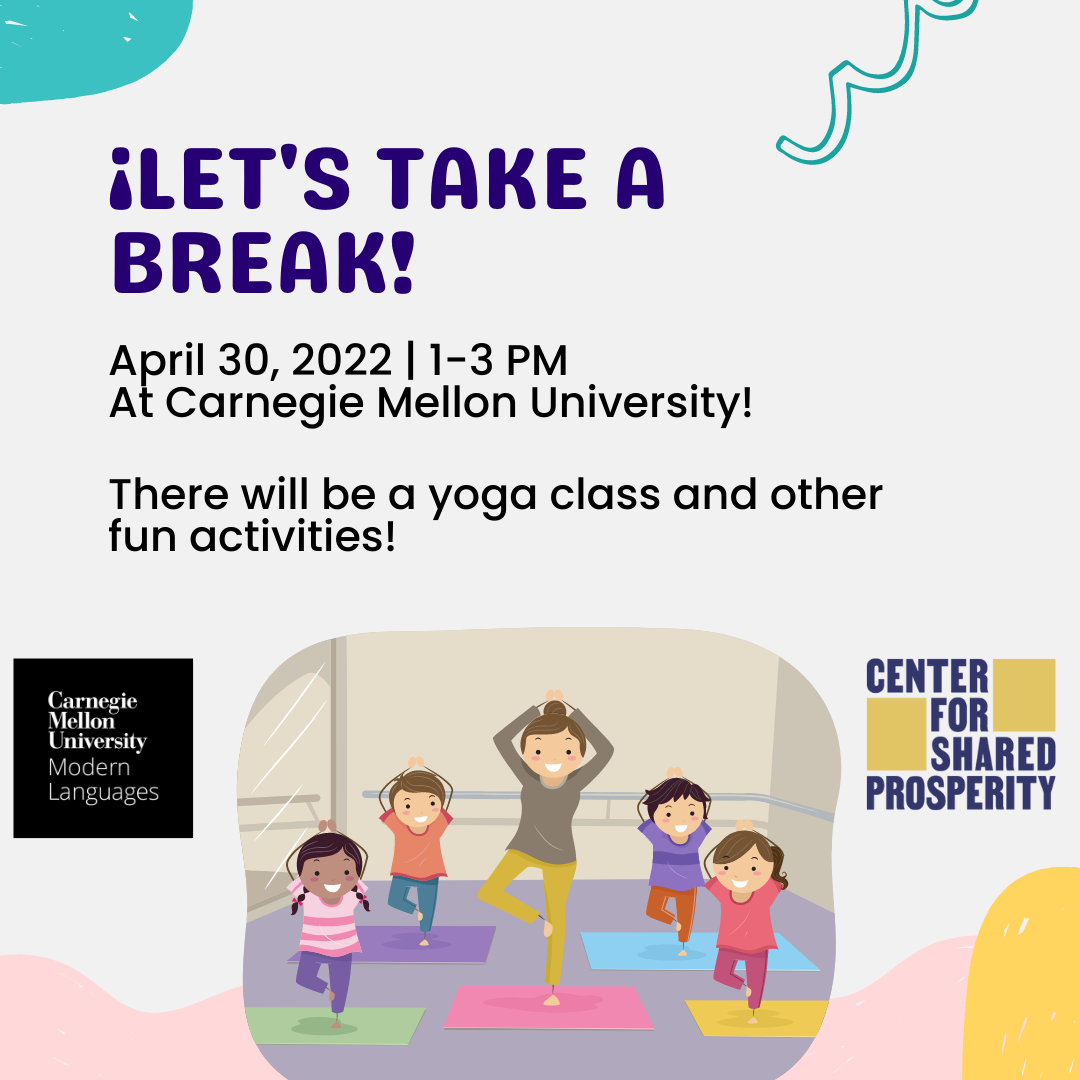
Para la siguiente actividad lxs niñxs escucharon música para reflejar lo que sentían a través del dibujo o pintura. A la mayoría de los niños no les gustaron algunas de las canciones, pero todos encontraron alguna que les gusto. Al terminar esta actividad, tomamos un breve descanso y después, los niñxs practicaron yoga y meditación. Durante este evento, ellxs realizaron un viaje donde unx de nuestrxs compañerxs dirigió la clase de yoga que fue liderada por animales marinos vía un video. El tema se trató de hacer yoga del mar. La historia empezó en un viaje en un barco en el mar pacífico desde el norte de Colombia hasta el sur de Chile. Empezamos en un lugar cálido con palmeras, agua caliente, y mucho sol. También viajamos cerca de la costa para ver unos paisajes increíbles de Colombia, Ecuador, Perú, y Chile. Al fin, llegaremos al sur de Chile, en la Patagonia, donde hace mucho frío y hay glaciares, nieve, y montañas. Esta actividad estuvo relacionada con el cuidado personal, ya que se trató sobre cómocomo mantener la salud mental haciendo yoga. Lxs niñxs también practicaron la meditación para relajarse. Para concluir esta actividad le preguntamos a lxs niñxs como se sentían después de esta actividad. Muchxs indicaron que se sentían más relajadxos.

La tercera actividad se trató de una tradición argentina conocida como sobremesa. La sobremesa es una tradición donde personas, la mayoría del tiempo familias, pasan tiempo juntos relajándose después de una comida charlando. Como esta es una tradición argentina, para la merienda hubo una variedad de empanadas argentinas. Para guiar la conversación, proporcionamos a lxs niñxs con una serie de preguntas para que pudieran hablar entre ellxsconsigo mismxs. Para concluir el evento, le pedimos a los niñxs que compartieran cómo se sentían y dibujaron sus sentimientos de nuevo. También compartieron con el grupo cómo se sentían. Para finalizar el evento, promoviendoer el cuidado personal, les proporcionamos a lxs niñxs materiales para hacer una pulsera, un juguete pequeño, y una lista de maneras de cómo practicar el cuidado personal.

Durante el evento, aprendimos cuánto les gusta a lxs niñxs expresarse artísticamente, especialmente a través de los dibujos y la pintura. Ellxs tienen maneras únicas de ilustrar sus emociones y pensamientos, demostrándonos cómo perciben el mundo. Algunos de lxs niñxs estaban muy emocionados por compartir con nosotrxs su arte, describiendo lo que habían dibujado o pintado y como lo habían hecho. En momentos así, notamos la importancia de escuchar activamente los procesos de pensamiento de lxs niñxs, demostrando un interés sincero en lo que les emociona a lxs niñxs.
Fue un placer pasar un día de descanso y cuidado personal con lxs niñxs, viendo de primera mano la inmensa creatividad de cada uno de ellxs. ¡Estamos muy agradecidos por su apoyo y participación durante nuestros tres eventos! Verdaderamente, disfrutamos poder facilitar estas experiencias educativas y divertidas para lxs niñxs, especialmente experimentando de primera mano, el gran poder de cultivar un sentido de comunidad. ¡Hasta pronto!

------------------------------------------------------------------------------------------------------------------------
The last event was a success, and it was about self-care. To start the event, we did a brief introduction. We all introduced ourselves, and asked the kids to introduce themselves. During the introduction, we talked about the meaning and importance of self-care, We found it interesting that the children were very knowledgeable about the topic. This was beneficial because it helped us explore the theme of the event in an easier manner since the children were informed. We asked them what they could do to practice self-care, and they indicated that they could exercise, sleep, and eat healthily. At the end of the introduction, we started the first activity, where the children drew their emotions at the current moment. We also made a mural with their drawings.

For the next activity, the children listened to music and reflected on what they were feeling through drawing or painting. Most of the kids did not like some songs, but they all found one they liked. At the end of this activity, we took a short break, and afterward, the children practiced yoga and meditation. During this event, they went on a trip where one of our classmates led the yoga class that included marine animals via video. This activity was centered on doing yoga at sea. The story began on a boat in the Pacific Ocean from the north of Colombia to the south of Chile. We started in a warm place with palm trees, hot water, and lots of sun. We also traveled close to the coast to see incredible landscapes from Colombia, Ecuador, Peru, and Chile. Finally, we arrived in the south of Chile, in Patagonia, where it is very cold and there are glaciers, snow, and mountains. This activity was related to personal care because it was about maintaining one’s mental health by doing yoga. The children also practiced meditation to relax. To conclude this activity, we asked the children how they were feeling compared to the beginning. Many indicated that they felt more relaxed.
The third activity was about an Argentine tradition known as sobremesa. This is a tradition where people, most of the time families, spend time together relaxing and chatting after a meal. Since this is an Argentine tradition, for snack time there was a variety of Argentine empanadas. To guide the conversation, we provided the children with a series of questions, so they could talk to each other. To conclude the event, we asked the children to share how they felt and to redraw their emotions. They also shared how they felt with the group. To end the event, we provided the children with a self-care kit consisting of materials to make a bracelet, a small fidget toy, and a list of ways to practice self-care.

During the event, we learned that children like to express themselves artistically, especially through drawing and painting. They have unique ways of illustrating their emotions and thoughts, showing us how they perceive the world. Some children were very excited to share their artwork with us, describing what they had drawn or painted and how they had done it. During moments like this, we realized the importance of actively listening to children’s thought processes and showing sincere interest in what the children enjoy.
It was a joy to spend a day of rest and personal care with the kids, seeing first-hand the immense creativity of each of them. We are very grateful for your support and participation during our three events! We truly enjoyed being able to facilitate these fun and educational experiences, especially experiencing first-hand the great power of cultivating a sense of community. See you soon!

¡Esperamos verles de nuevo en el otoño! 👦👧👨👩
We look forward to seeing you again in the Fall! 👍👋👥🙏


.HEIC)


%20(1).png)


